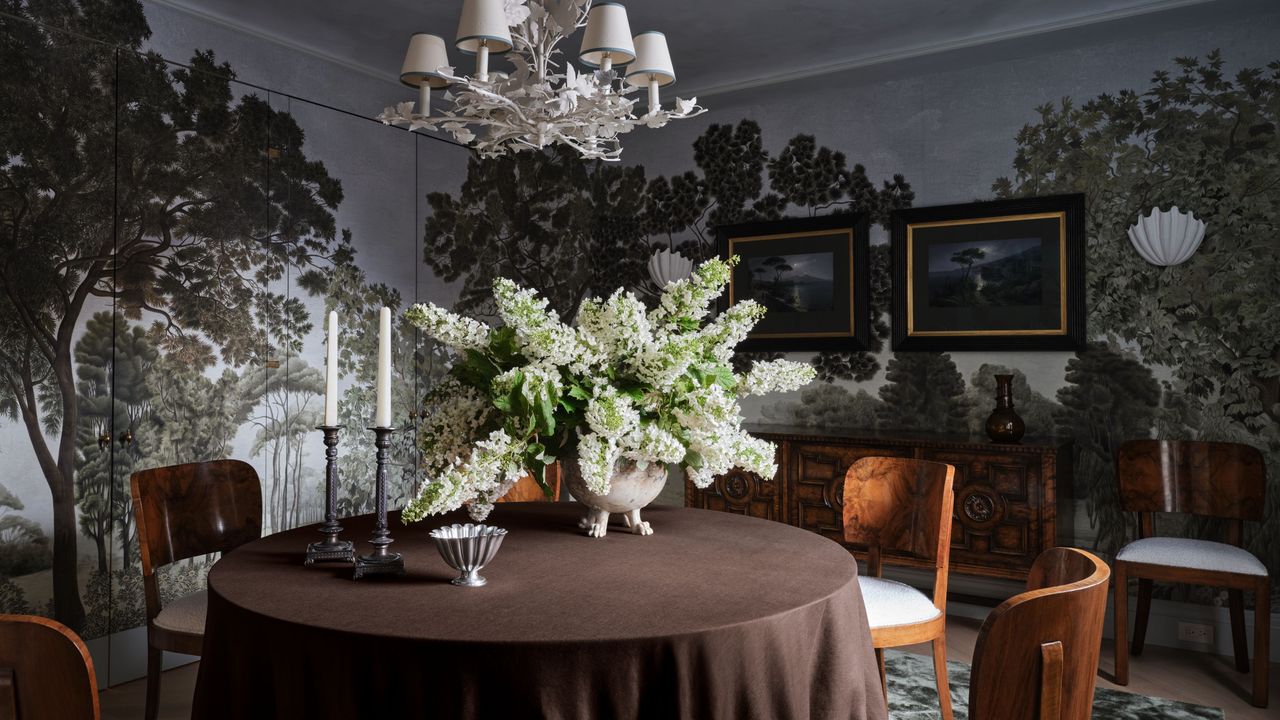
Some of the best renovations are undetectable. At first glance, this Upper East Side apartment looks as though it’s always been this elegant – from the mural-wrapped dining room and patinated antiques to the layered rooms that feel as if they’ve evolved over generations. But appearances can be deceiving.
When architect Elizabeth Graziolo of Yellow House Architects was commissioned to transform the pre-war house for homeowner and interior designer Annabelle Moehlmann after her move from California to New York, the ambition wasn’t to erase its history. Rather than chasing contemporary trends, the pair focused on something less obvious. Instead, as Elizabeth explains, ‘we wanted the home to feel lighter, more connected, and more intuitive’. Behind the scenes, rooms flow more naturally, entertaining spaces sit comfortably alongside family life, and, in Elizabeth’s words, ‘the architecture works quietly in the background.’
There’s a reason Upper East Side apartments are so coveted. Behind their handsome façades lie soaring ceilings, beautifully proportioned rooms, intricate moldings, and the kind of architecture that simply can’t be replicated. But for all their elegance, they were designed for a very different era.
‘While it possessed many beautiful qualities, the layout felt more formal and compartmentalized than the way families tend to live today,’ Elizabeth explains. ‘From the outset, I saw the potential to create a home that felt lighter, more connected, and more intuitive, while still respecting the architectural language and history of the building.’
Rather than stripping away those traditional bones, Elizabeth’s vision was to soften them. The design, she says, ’embraces traditional proportions and detailing but interprets them in a way that feels lighter, warmer, and more relaxed.’ It’s a balancing act that’s easier said than done – open up too much, and you risk losing the intimacy and grandeur that make these homes so special. Preserve too much, and they can feel frozen in time. ‘The goal was never to recreate a period interior,’ Elizabeth says. Instead, the aim was to create a home that respected its history but also where children could spill into family spaces, friends could gather, and everyday life could unfold against a ‘welcoming rather than overly formal’ backdrop.
Together, Elizabeth and Annabelle – the latter of whom had recently relocated from California and took the lead on the interiors – sought to bridge two different design languages: the sophistication of New York’s Upper East Side and the easy, informal spirit often associated with West Coast living. ‘There was a strong shared commitment from the beginning to creating a home that felt highly personal and deeply livable,’ says Elizabeth. ‘My role was to develop the architectural framework that would support those aspirations.’
The beauty of Elizabeth’s renovation is that much of its prowess isn’t immediately visible. There’s no dramatic double-height extension or large, contemporary openings. Instead, the biggest transformation lies in how you move through the home. ‘The project involved a comprehensive rethinking of circulation and spatial relationships across all 13 rooms,’ Elizabeth explains.
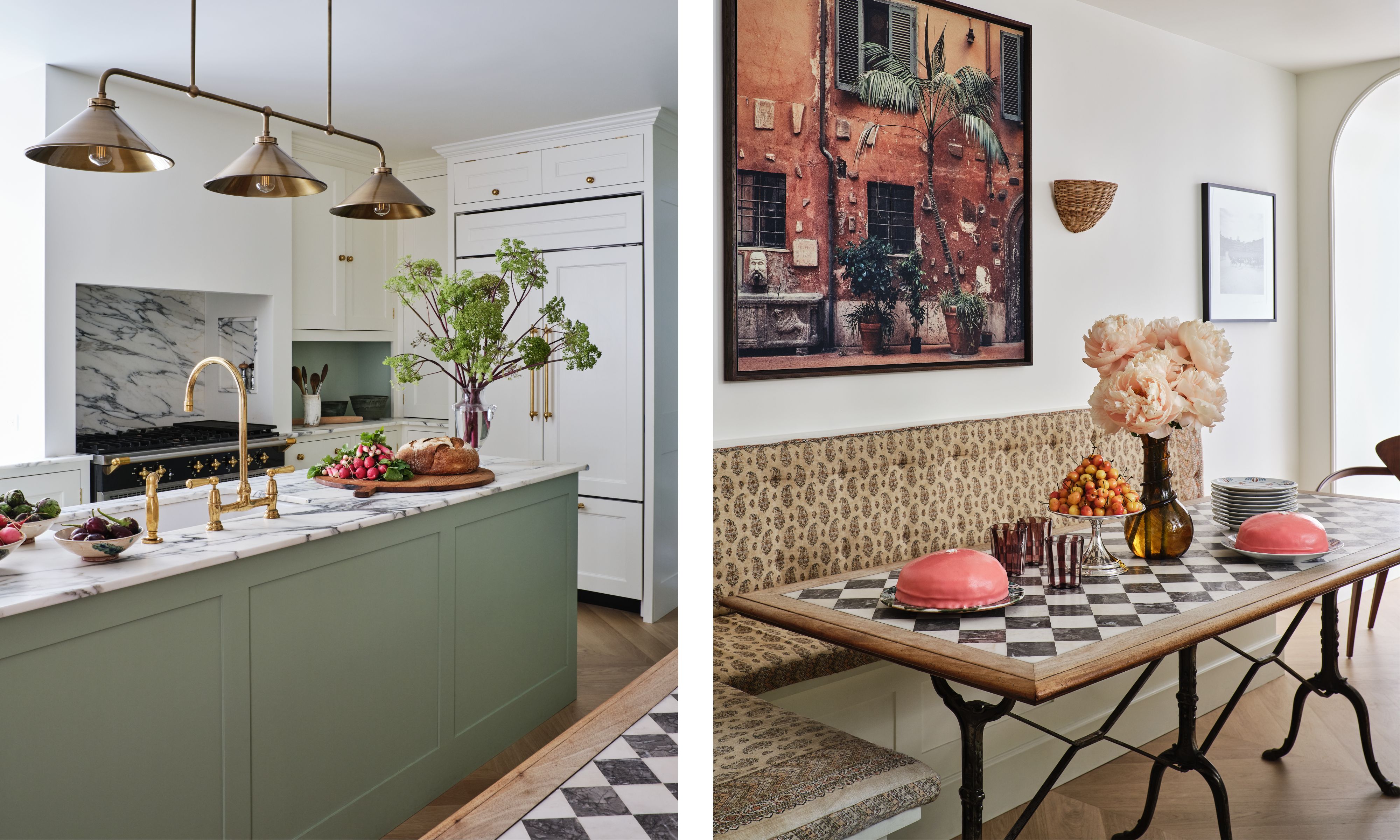
‘One of the most significant interventions was opening the kitchen into a light-filled breakfast room, creating a more social and functional center of the home,’ she continues. ‘We also introduced a dedicated family room that now serves as the heart of daily life. The library was relocated to engage more naturally with the living room and dining space, and the primary suite was transformed into a true retreat with a seating area and fireplace. Collectively, these changes improved flow, encouraged connection, and made the home feel much more aligned with contemporary living.’
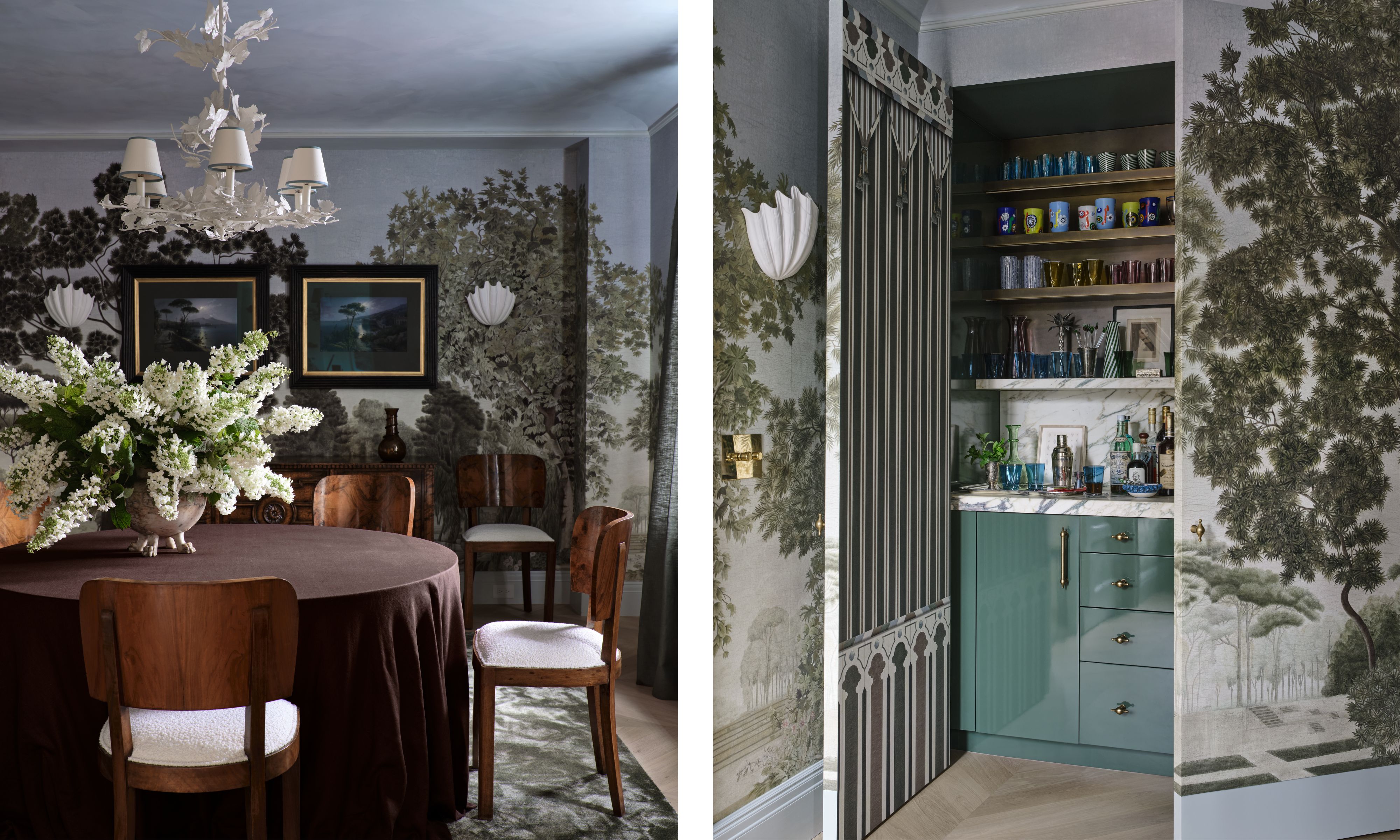
If Elizabeth’s architecture provides the structure, it’s Annabelle’s interiors that bring the apartment to life. She wasn’t interested in recreating the formality often associated with grand Manhattan apartments. Instead, she embraced a softer, more layered approach. Elizabeth describes the overall aesthetic as ‘timeless and refined, balancing classical architecture with contemporary living.’ Hand-painted murals wrap both the dining room and bathroom in charm, antiques sit comfortably alongside contemporary lighting, while thoughtfully chosen fabrics, art, and collected objects soften the home’s classical architecture rather than competing with it.
‘The overall atmosphere is one of warmth, sophistication, and restraint,’ Elizabeth continues. ‘Architectural elements such as fluted wall treatments, parchment paneling, and custom millwork introduce texture and depth rather than relying on bold gestures. The emphasis is on craftsmanship, materiality, and subtle layering, creating a home that feels timeless rather than trend-driven,’ she adds.
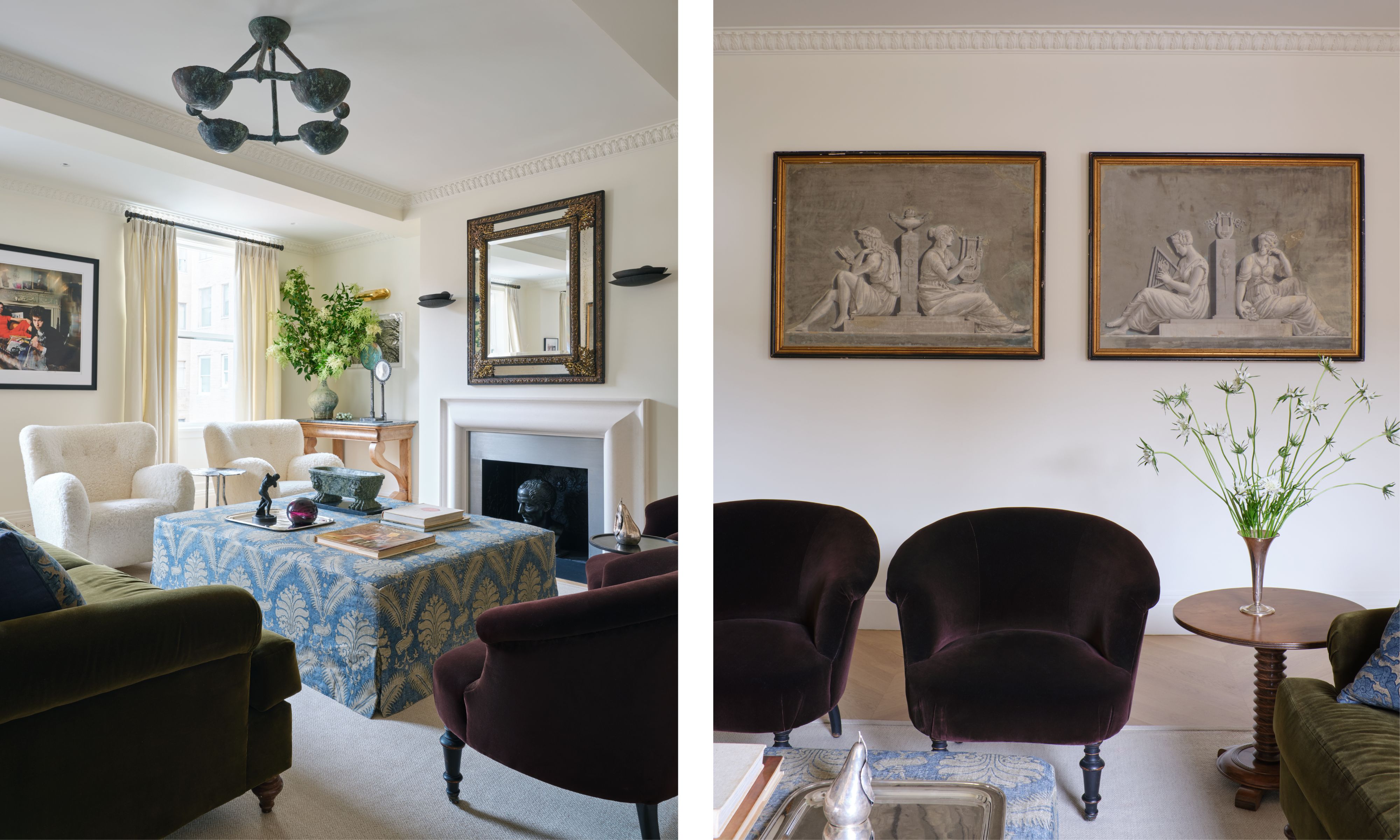
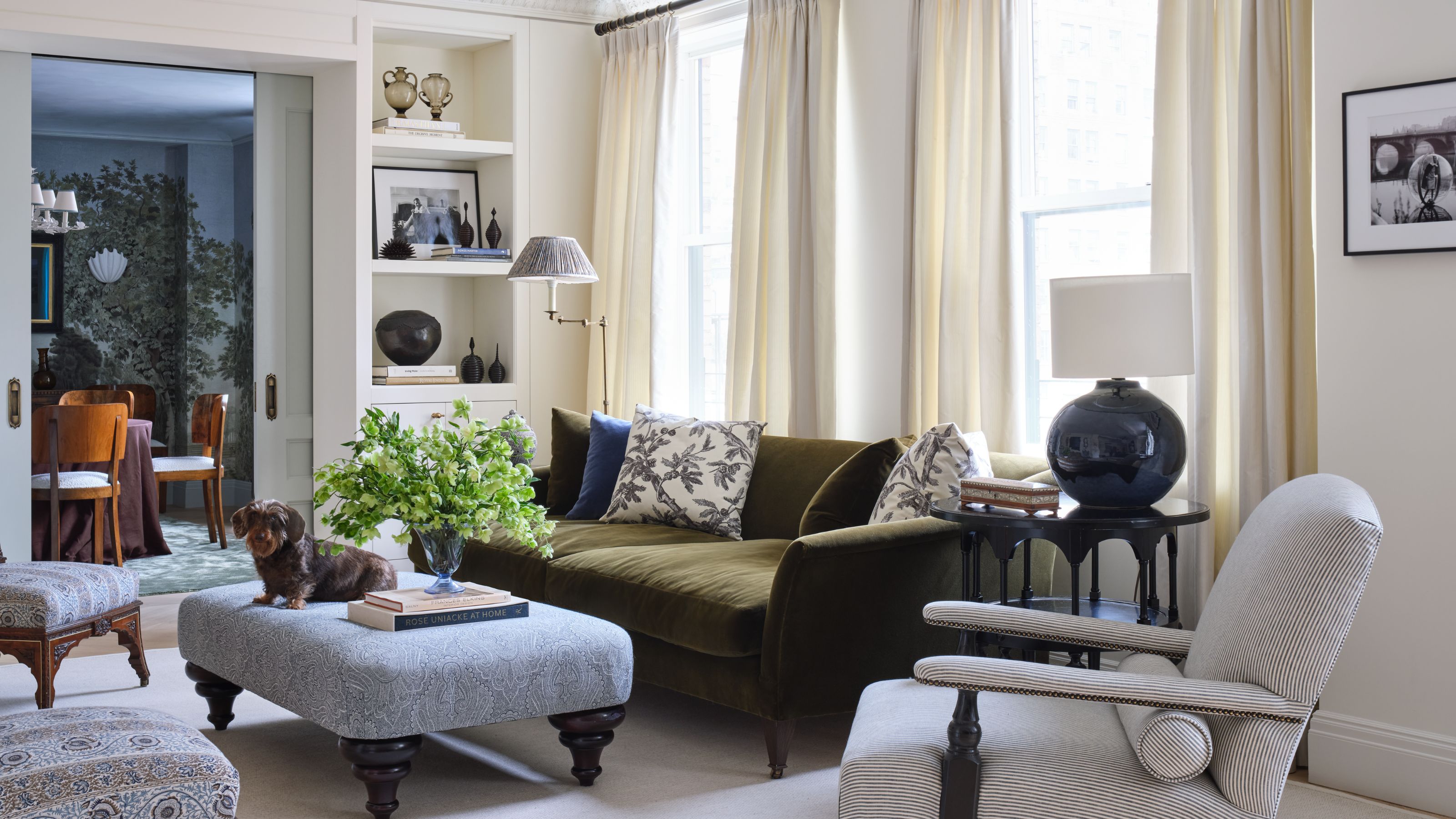
In a quieter foil to the pattern-drenched dining room, adjacent to the kitchen sits the family room, which ‘serves as the home’s central hub and represents one of the most important additions to the layout,’ Elizabeth explains. Framed by generous windows, the space trades drama for comfort, where a conversational-ready layout, antique accents, and inviting upholstery create a room designed to be lived in rather than simply admired.
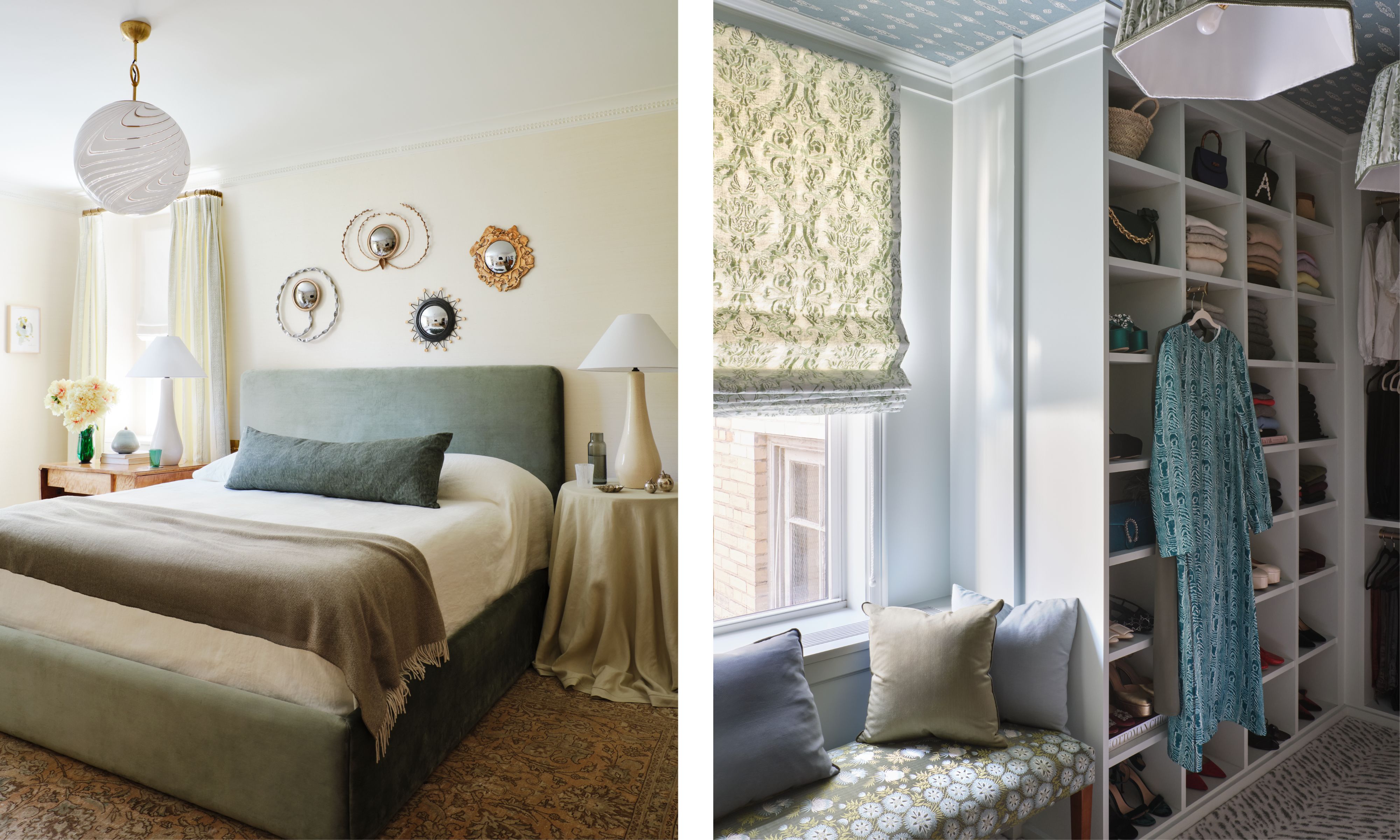
Upstairs, the atmosphere is noticeably more serene. The primary bedroom was ‘completely reimagined as a private retreat,’ Elizabeth says of the restful palette, where sage green upholstery, antique accents, and layered textiles create a sense of upscale relaxation. ‘A seating area and fireplace create warmth and intimacy, while the dressing room incorporates custom millwork with glazed doors and French wire mesh,’ she adds of the adjoining dressing room.
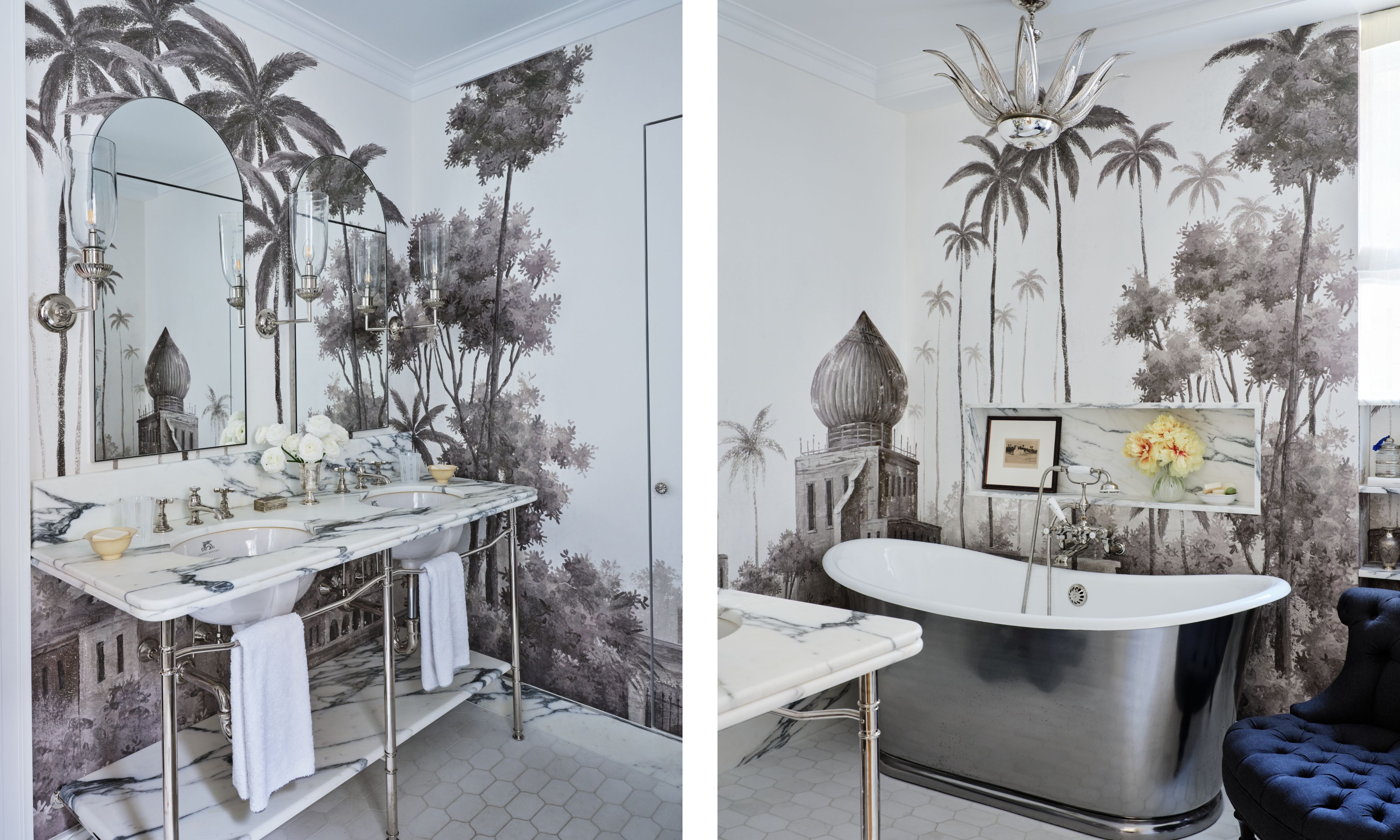
The sense of escapism continues into the primary bathroom, where a hand-painted mural transforms the room with a tranquil landscape of swaying palms and follies. Rather than competing with the striking Arabescato marble vanity and freestanding bathtub, the artwork softens the space, lending it the atmosphere of a boutique hotel rather than a traditional en suite.
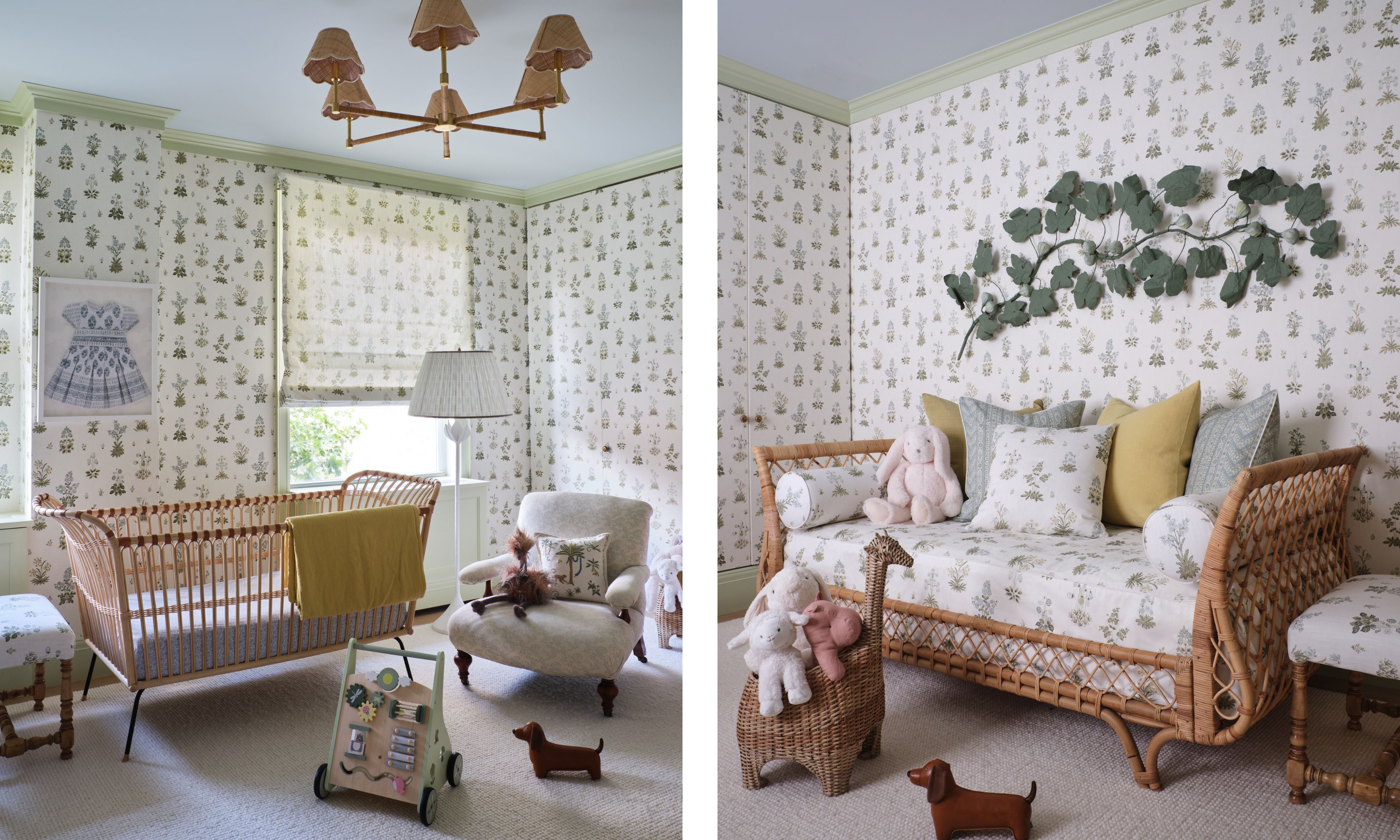
Like the rest of the apartment, the nursery strikes a careful balance between elegance and ease. Botanical wallpaper wraps the room in a gentle pattern, while pale green trim, woven rattan furniture, and soft textiles create a space that feels playful and whimsical. It’s a room designed to grow alongside its young occupant, but rather than relying on bright colors or novelty motifs, Annabelle layered natural materials, vintage pieces, and timeless prints to create a nursery with the same collected character found throughout the home.
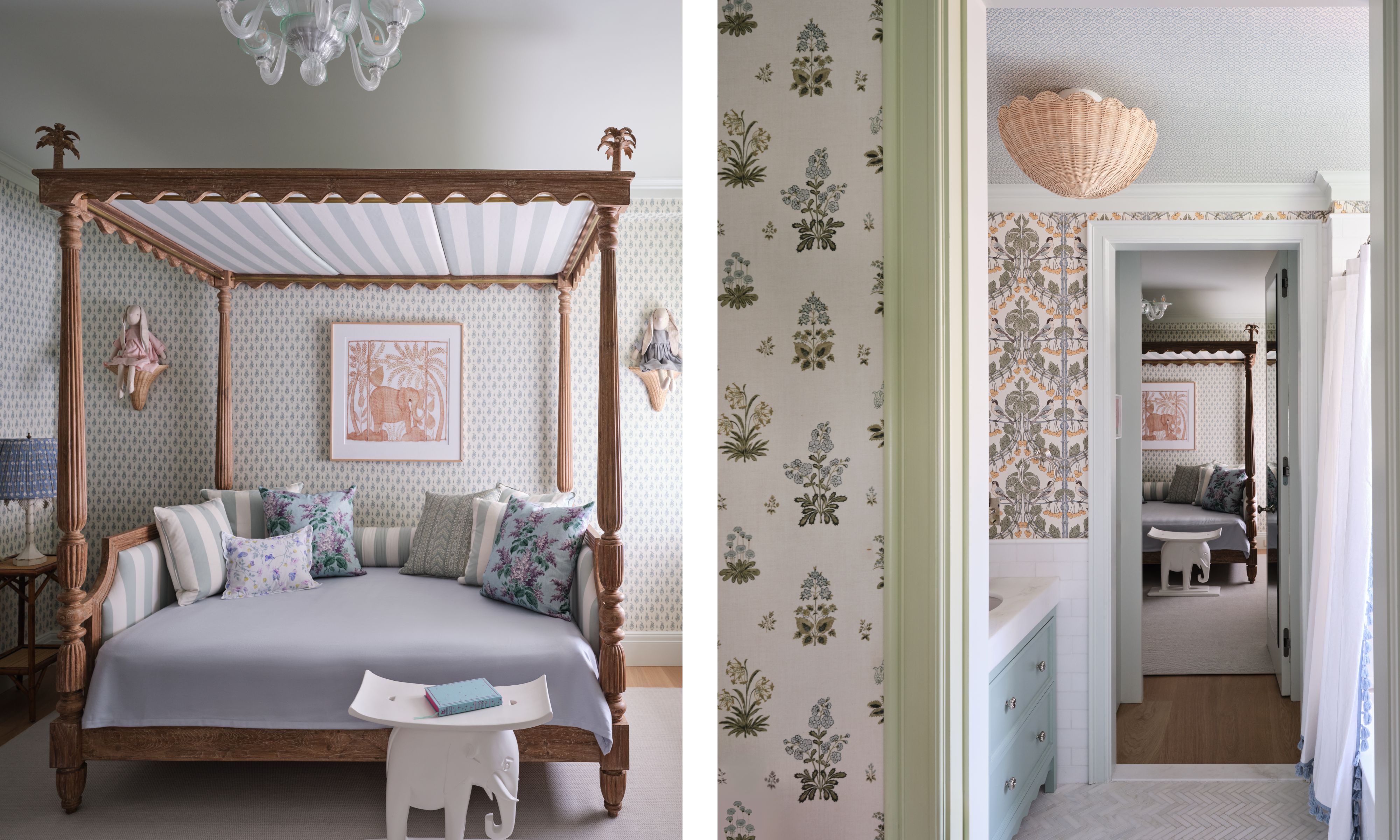
Patterned wallpapers, painted millwork, and antique-inspired furniture continue into this children’s bedroom, connected to the nursery via a Jack-and-Jill bathroom. A carved four-poster bed becomes the focal point of the bedroom, layered with striped fabrics and botanical prints that nod to the family’s California roots. Beyond, the bathroom continues the story with pale blue cabinetry, patterned wallpaper, and textured finishes, creating a seamless flow between the spaces.
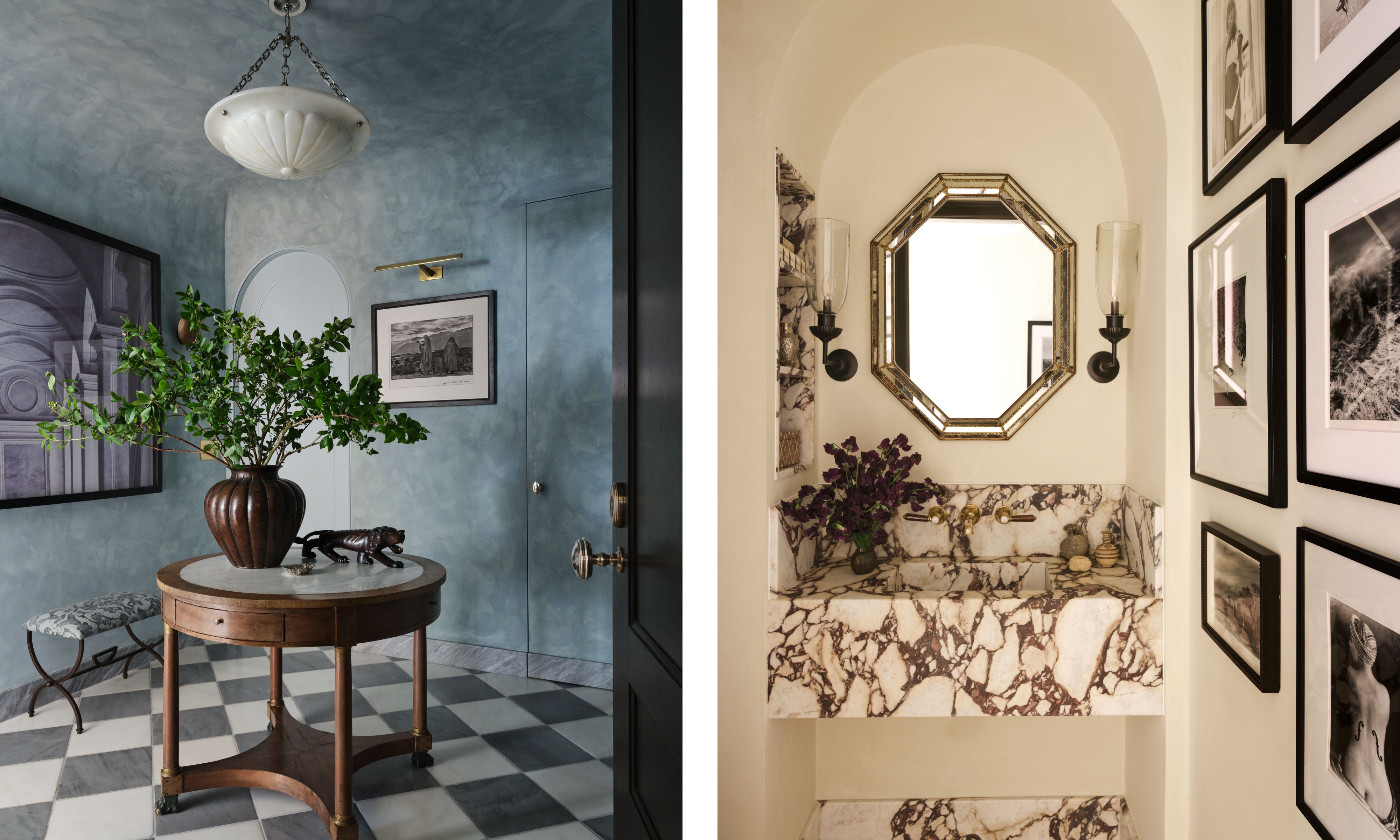
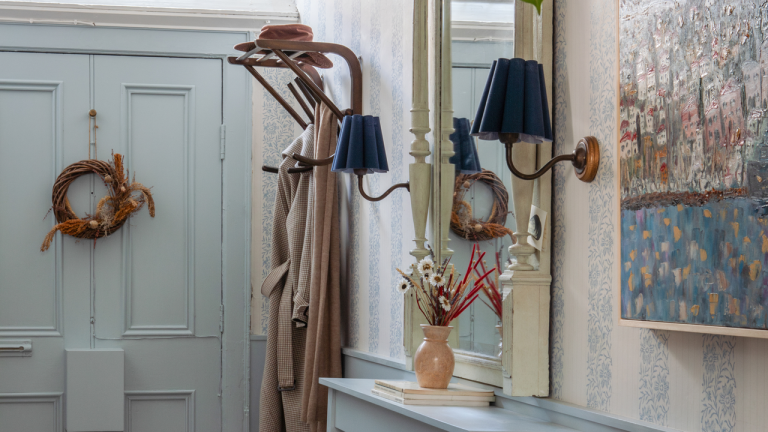
Even the apartment’s transitional spaces are given the same level of consideration as its entertaining rooms. The entry sets the tone immediately, pairing a cloud-like blue finish with a classic checkerboard marble floor that feels both timeless and theatrical. Just beyond, the bijoux powder room embraces elegance. A richly veined marble sink and niche, antique mirror, and a gallery wall of black-and-white photography transform a compact space into one of the apartment’s most luxurious moments.
By the time you reach the front door again, it becomes clear that this renovation was never about changing the character of a classic Upper East Side apartment. By resisting the temptation to either preserve the apartment as a time capsule or erase its past entirely, Elizabeth and Annabelle have found the sweet spot between heritage and modern life. The architecture works ‘quietly in the background’, while layered interiors filled with antiques, patterns, and personal treasures bring warmth and individuality to every room.
Love beautiful design ideas, expert advice, and inspiring decor trends? Sign up for our newsletter and get the latest features delivered straight to your inbox.
About the Author